Introduction
What does it truly mean to live well? Is it about being successful, earning a good income, maintaining good physical health, or experiencing happiness every day?
While these factors can contribute to a fulfilling life, well-being goes much deeper. It is not simply the absence of illness, stress, or emotional difficulties. It is about developing a meaningful, balanced, and fulfilling life in which individuals feel emotionally healthy, psychologically resilient, socially connected, and satisfied with themselves.
In psychology, well-being is understood as a multidimensional concept that involves how people feel, how they function, and how they find meaning in their lives. The science of well-being explores what helps individuals flourish, build resilience, experience positive emotions, and develop a deeper sense of purpose.
Understanding the Science of Well-being
Well-being is a central area of research in positive psychology, a branch of psychology that focuses on human strengths, happiness, positive emotions, personal growth, and optimal functioning.
Traditionally, psychology has focused significantly on understanding psychological disorders, emotional difficulties, and mental health challenges. Positive psychology expanded this perspective by asking an equally important question:
What enables people not just to survive, but to thrive?
Researchers have identified that well-being is influenced by several interconnected factors, including:
· Emotional health and emotional regulation.
· Positive relationships and social connections.
· Physical health and lifestyle habits.
· A sense of purpose and meaning.
· Personal achievements and self-growth.
· Resilience and the ability to manage challenges.
· Self-acceptance and life satisfaction.
Well-being is not a permanent state of happiness. It is an ongoing process of adapting, growing, and finding balance through different experiences of life.
The Two Major Dimensions of Well-being
Psychologists often understand well-being through two important perspectives: hedonic well-being and eudaimonia well-being.
1. Hedonic Well-being: The Experience of Happiness
Hedonic well-being focuses on pleasure, happiness, positive emotions, and life satisfaction.
It involves experiencing joy, comfort, relaxation, excitement, and contentment in everyday life.
Examples include:
· Spending quality time with loved ones.
· Enjoying hobbies and personal interests.
· Experiencing moments of gratitude.
· Celebrating personal achievements.
· Taking time to relax and recharge.
However, happiness based only on pleasurable experiences may be temporary. Positive emotions are important, but they are only one part of a fulfilling life.
2. Eudaimonism Well-being: Living a Meaningful Life
Eudaimonism well-being focuses on personal growth, purpose, meaning, and becoming the best version of oneself.
It is not simply about feeling happy; it is about feeling that life has direction and significance.
For example:
· Working towards meaningful goals.
· Helping others and contributing to society.
· Developing personal strengths.
· Learning new skills.
· Building a life aligned with personal values.
A person may experience stress while pursuing an important goal and still feel deeply fulfilled because their efforts contribute to something meaningful.
True well-being involves both feeling good and functioning well.
PERMA: The Five Building Blocks of Well-being
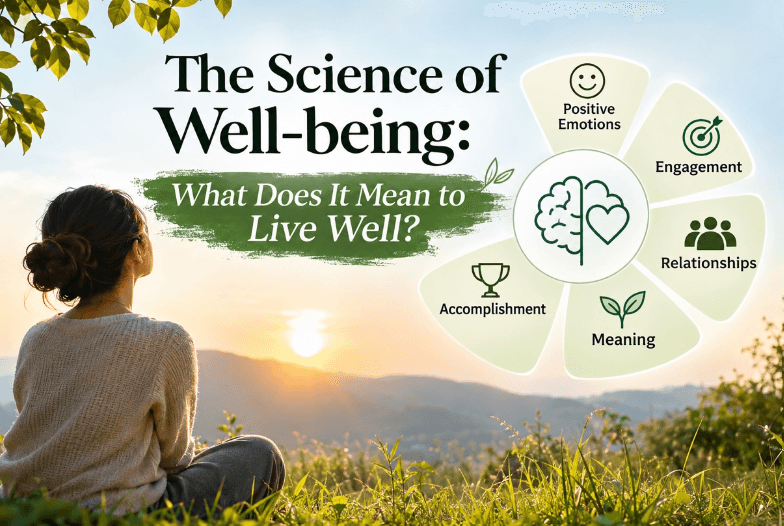
Psychologist Dr Martin Seligman introduced the PERMA model of well-being, which identifies five essential elements that contribute to flourishing.
P – Positive Emotions
Positive emotions include happiness, gratitude, hope, love, joy, and contentment.
Experiencing positive emotions can help individuals develop healthier perspectives, strengthen relationships, and cope more effectively with everyday challenges.
Practicing gratitude, appreciating small moments, and engaging in enjoyable activities can help nurture positive emotions.
Engagement
Engagement refers to becoming deeply involved in activities that capture our attention and interest. Have you ever been so involved in an activity that you completely lost track of time?
This experience is often associated with the psychological concept of flow, introduced by psychologist Mihaly Csikszentmihalyi.
Activities such as painting, reading, writing, playing sports, or solving problems can create opportunities for engagement.
R – Relationships
Human beings are naturally social. Positive relationships play an essential role in psychological well-being.
Supportive relationships provide emotional security, belongingness, encouragement, and connection.
Spending quality time with family, maintaining friendships, communicating openly, and developing meaningful connections can contribute significantly to life satisfaction.
M – Meaning
Meaning involves feeling that life has a purpose beyond personal happiness.
It may come from family, professional responsibilities, spirituality, creativity, community involvement, or helping others.
Having a sense of purpose can provide direction during difficult circumstances and motivate individuals to continue working towards meaningful goals.
A – Accomplishment
Accomplishment refers to pursuing goals, developing competence, and experiencing a sense of achievement.
Achievements do not always have to be significant milestones. Completing a daily task, learning something new, maintaining a healthy routine, or overcoming a personal challenge can also create a sense of accomplishment.
Together, these five elements provide a useful framework for understanding and strengthening well-being.
The Connection Between Mental Health and Well-being
Mental health and well-being are closely connected, but they are not exactly the same.
Mental health includes our emotional, psychological, and social functioning. It influences how we think, feel, behave, manage stress, and interact with others.
Well-being represents a broader experience of how positively and meaningfully we function in life.
An individual may not have a diagnosed mental health condition but may still experience loneliness, emotional exhaustion, lack of purpose, or dissatisfaction.
Similarly, individuals experiencing mental health challenges can still experience meaningful relationships, hope, personal growth, and moments of happiness.
This is why mental healthcare should not focus exclusively on reducing symptoms. It should also encourage emotional development, resilience, self-awareness, and overall quality of life.
The Role of the Brain in Well-being
Our brain plays a significant role in regulating emotions, motivation, stress responses, memory, and social behavior.
Several neurotransmitters and brain systems contribute to our emotional experiences:
Dopamine: Associated with motivation, reward processing, and learning.
Serotonin: Involved in mood regulation, sleep, and several other physiological processes.
Oxytocin: Plays a role in social bonding and interpersonal connections.
Endorphins: Involved in pain regulation and can contribute to feelings of pleasure.
Well-being is not controlled by one chemical or a single brain region. It emerges through complex interactions between biological processes, psychological experiences, social environments, and lifestyle factors.
Understanding these connections highlights the importance of caring for both our brain and our psychological health.
Seven Practical Ways to Improve Your Well-being
Well-being does not require dramatic lifestyle changes. Small, consistent actions can contribute to meaningful improvements over time.
1. Practice Mindfulness
Mindfulness involves paying attention to the present moment without unnecessary judgement.
Taking a few minutes each day to observe your thoughts, breathing, and emotions can improve self-awareness and help manage everyday stress.
2. Priorities Physical Health
Physical and psychological health are closely interconnected.
Regular physical activity, balanced nutrition, adequate sleep, and proper hydration support overall health and emotional functioning.
3. Build Meaningful Relationships
Make time for people who provide emotional support and encouragement.
Healthy relationships create a sense of belonging and help individuals navigate difficult experiences.
4. Develop Emotional Awareness
Learn to recognise, understand, and express your emotions.
Instead of suppressing difficult feelings, acknowledge them and explore what they may be communicating.
5. Set Realistic Goals
Setting achievable goals provides direction and motivation.
Break larger goals into smaller steps and appreciate your progress rather than constantly comparing yourself with others.
6. Practice Gratitude
Take a few moments every day to identify things you appreciate.
Writing down three positive experiences or moments of gratitude can encourage a greater appreciation of everyday life.
7. Seek Professional Support When Needed
Sometimes, emotional difficulties require professional attention. Psychological counselling and evidence-based mental health interventions can help individuals understand their experiences, develop coping strategies, and improve their quality of life.
Seeking help is not a sign of weakness; it is an important step towards psychological well-being.
Why Well-being Should Be a Priority in Modern Life
Modern lifestyles have introduced several challenges to psychological well-being. Workplace pressure, academic competition, financial responsibilities, social media comparisons, loneliness, and constant digital engagement can affect emotional balance.
People often become so focused on achieving professional and personal milestones that they forget to take care of their psychological needs. We may spend hours planning our careers, managing responsibilities, and fulfilling expectations, but how often do we pause and ask ourselves:
· Am I emotionally satisfied?
· Do I have meaningful relationships?
· Am I taking care of my mental health?
· Do I feel connected to my purpose?
· Am I making time for myself?
These questions encourage us to look beyond external achievements and recognise the importance of internal fulfilment.
Well-being should not be treated as a luxury that we pursue only when everything else in life is organized. It should be an essential part of our everyday lives.
Conclusion: Living Well Is a Journey, Not a Destination
The science of well-being teaches us that living well is not about being happy all the time, avoiding difficulties, or achieving perfection. It is about developing the emotional strength to navigate challenges, the awareness to understand ourselves, the courage to pursue meaningful goals, and the ability to appreciate the present moment. A fulfilling life is created through a combination of positive emotions, meaningful relationships, personal growth, physical health, and a sense of purpose.
It is believed that mental health is an essential foundation of overall well-being. Promoting psychological awareness, encouraging healthy habits, and making professional mental health support accessible are important steps towards building healthier individuals and communities. Because ultimately, living well is not just about adding more years to life; it is also about adding more meaning, connection, and quality to those years.
Take a moment today to ask yourself: Am I simply living my life, or am I truly flourishing?